Hybrid machines are one of the hottest equipment categories in advanced manufacturing. Here is how they work, what they deliver, where they shine, and the mistakes that trip up first-time buyers.
What Is Hybrid Additive and Subtractive Manufacturing?
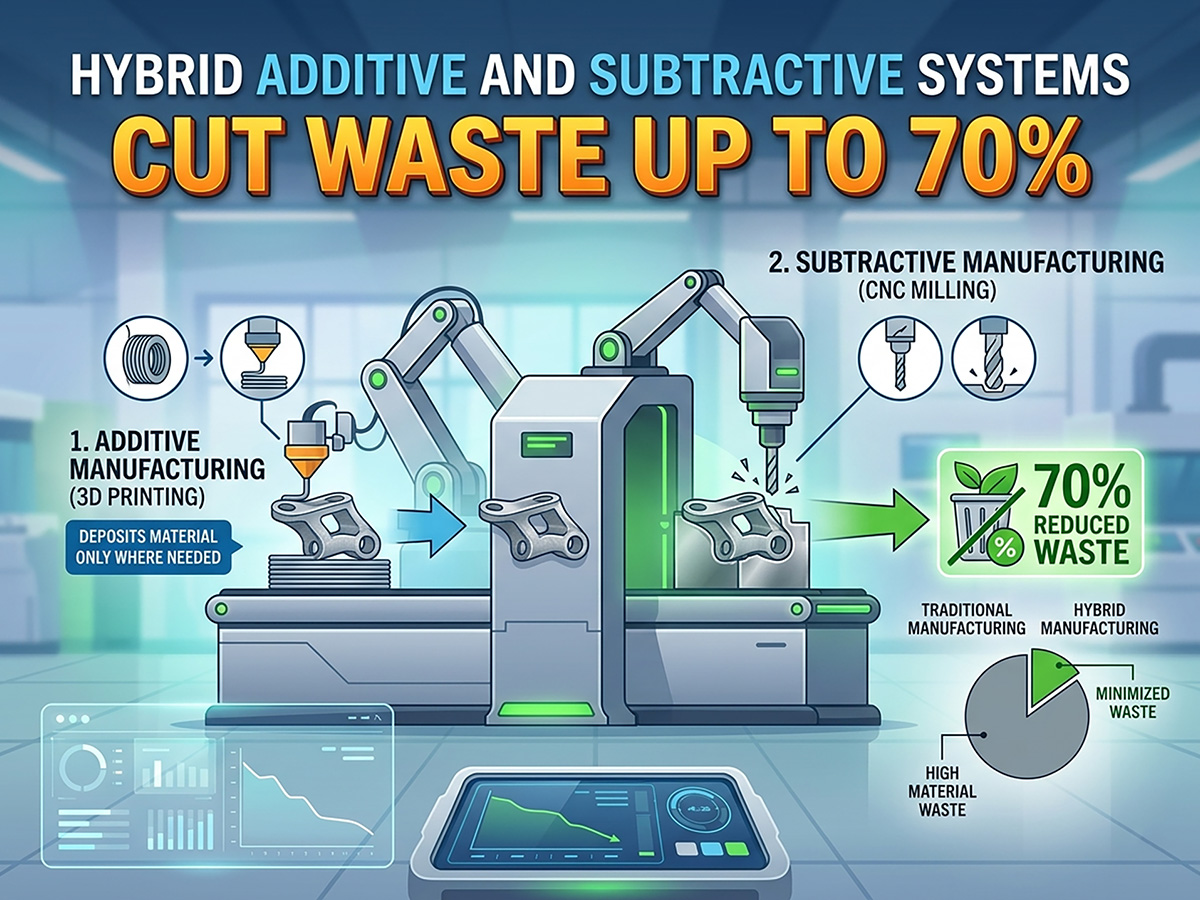
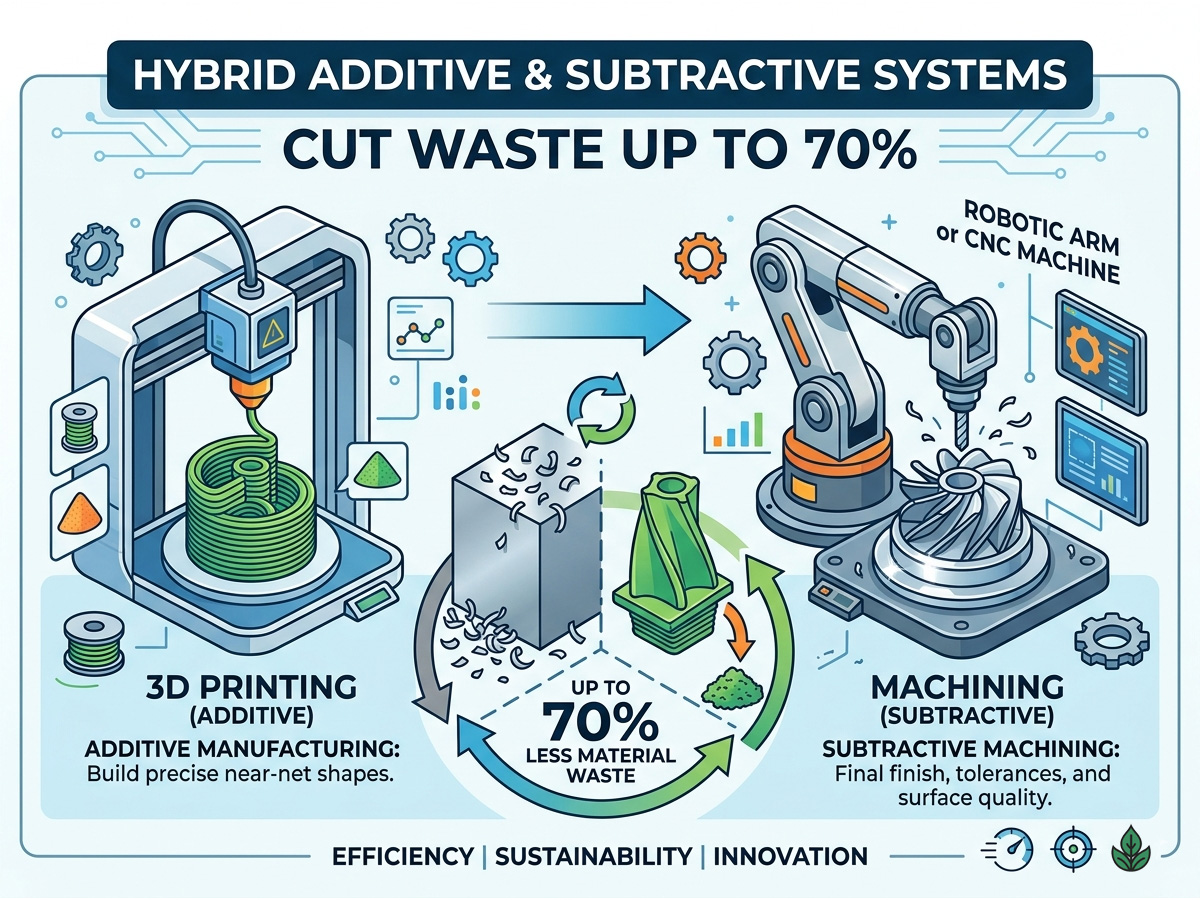
To understand hybrid, you 1st need the 2 halves it combines. Additive manufacturing builds a part up by adding material layer by layer. Subtractive manufacturing cuts a part down by removing material from a solid block.
A hybrid system does both inside one machine. It typically pairs 5-axis CNC milling with a metal deposition head, switching between building and cutting as the part takes shape.
Additive vs. Subtractive: The Core Difference
| Medição | Additive (Building Up) | Subtractive (Cutting Down) |
| Processo | Deposits metal layer by layer | Removes metal from a solid block |
| Desperdício de material | Very low, uses only what is needed | High, much becomes chips and scrap |
| Liberdade geométrica | Complex internal shapes possible | Limitado pelo acesso à ferramenta |
| O acabamento da superfície | Áspero, precisa de acabamento | Smooth, precision finish |
| Melhor em | Near-net shapes, repairs, coatings | Tight tolerances, fine detail |
Hybrid manufacturing captures the best of both. For a deeper look at how these 2 philosophies compare on their own, see our guide on 3D printer vs. CNC machine.
How a Hybrid Machine Works
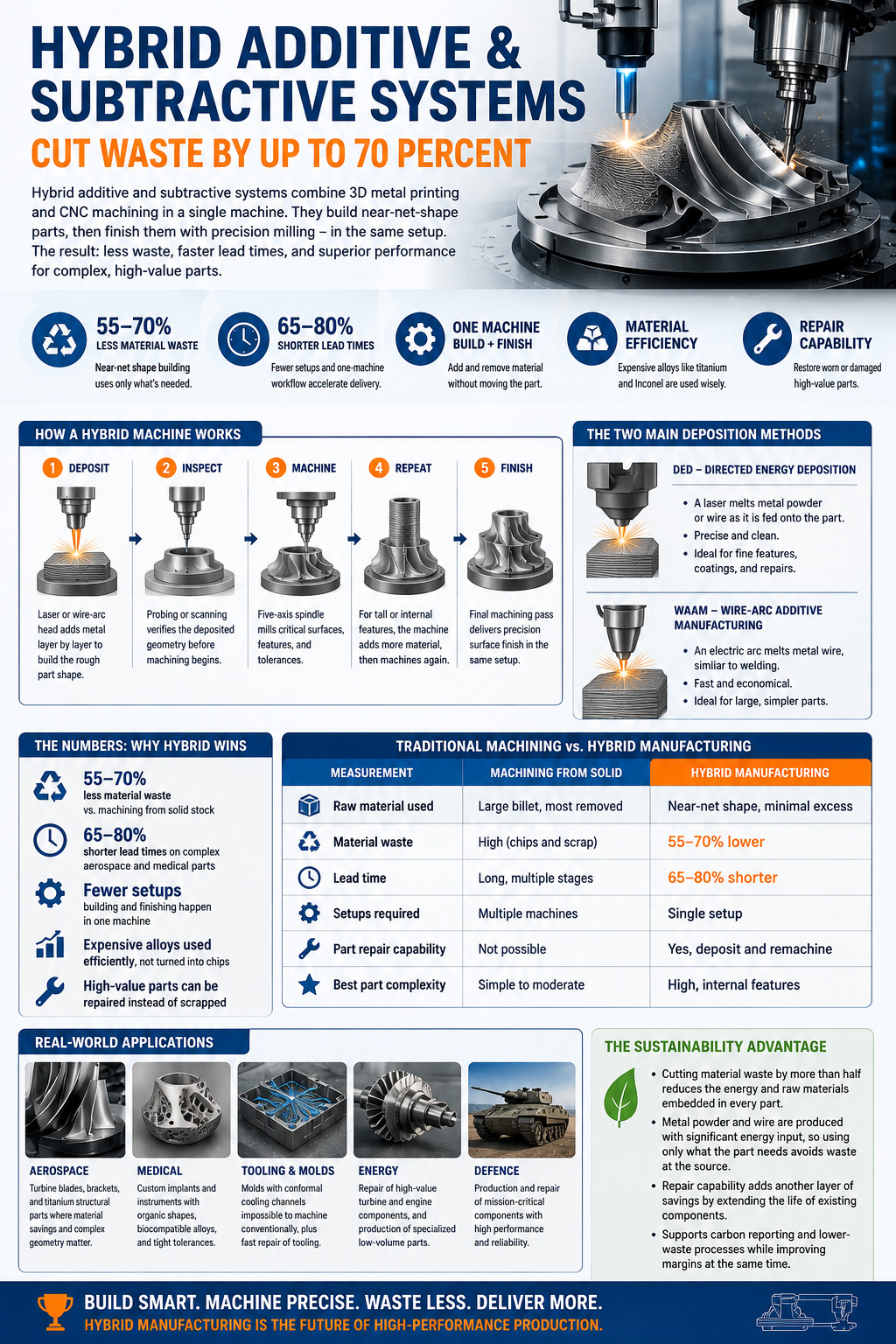
The workflow inside a hybrid system follows a logical build-and-finish rhythm. The machine alternates between adding and removing material until the part is complete.
1. Depositar: A laser or wire-arc head melts metal powder or wire to build the rough part shape directly on the bed.
2. Inspecione: Probing or scanning checks the deposited geometry before machining begins.
3. Lavagem: The 5-axis spindle mills critical surfaces, features, and tolerances to final spec.
4. Repeat: For tall or internal features, the machine adds more material, then machines again, layer by layer.
5. Acabamento: A final machining pass delivers the precision surface finish in the same setup, with no part transfer.
The 2 Main Deposition Methods
Hybrid systems use one of 2 additive technologies, each suited to different part sizes and materials:
. Deposição de energia direcionada (DED): A laser melts metal powder or wire as it is fed onto the part. Precise and clean, ideal for fine features, coatings, and repairs.
. Wire-Arc Additive Manufacturing (WAAM): An electric arc melts metal wire, similar to welding. Fast and economical for large, simpler parts.
The deposition side shares much of its DNA with industrial welding technology. STYLECNC soldadores a laser use the same fiber-laser fundamentals that power laser-based metal deposition heads.
The Numbers: Why Hybrid Cuts Waste and Time
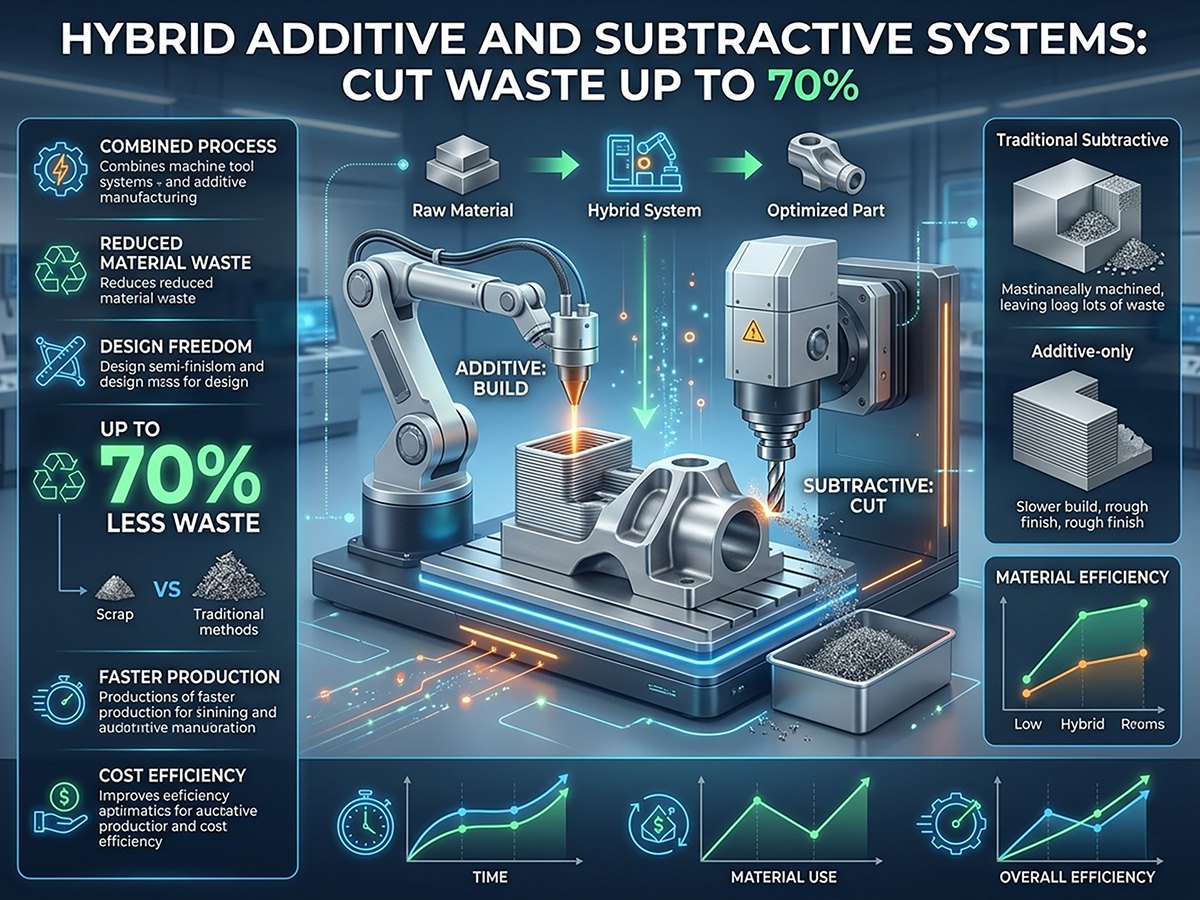
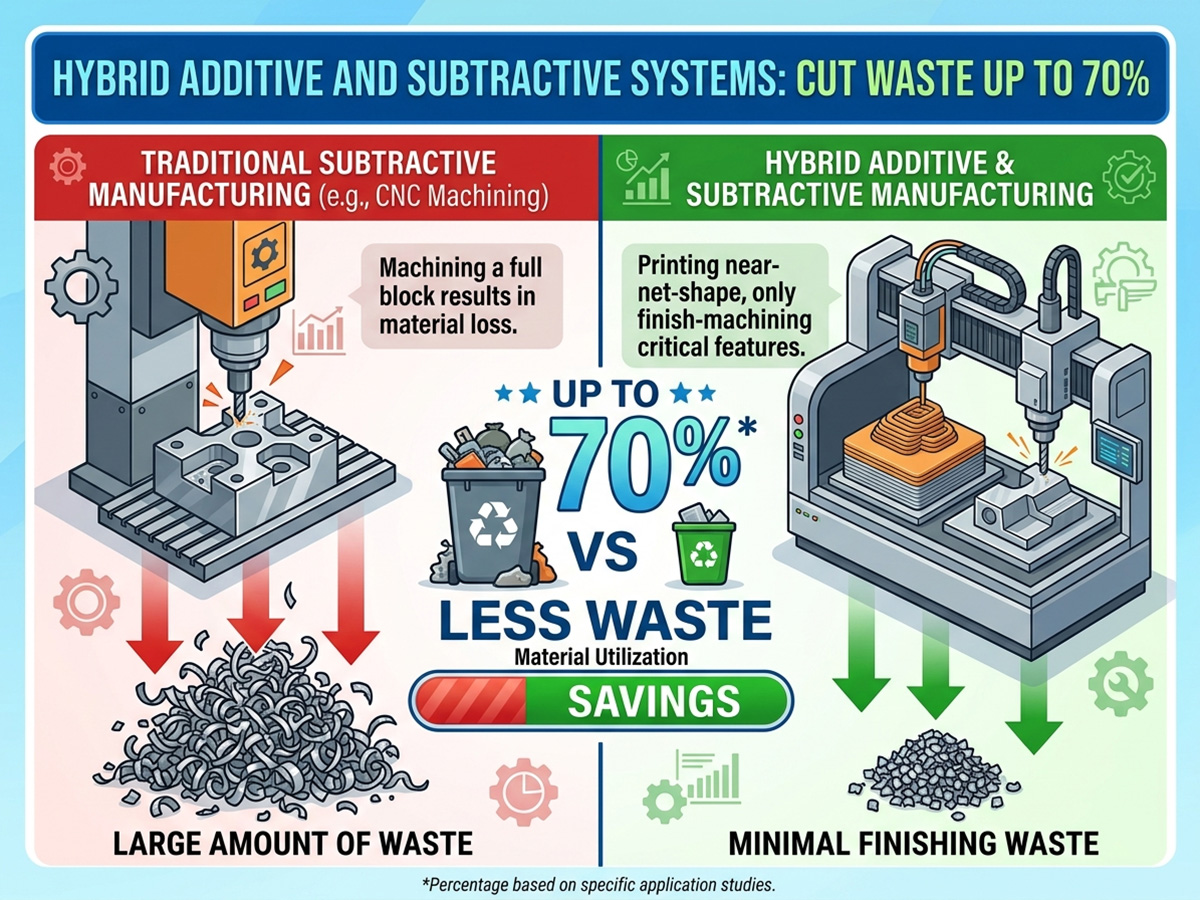
The headline benefit is dramatic reductions in both material waste and lead time. These gains come from building near-net shapes instead of carving parts from oversized billets.
• Material waste reduced by 55 to 70 percent versus machining from solid stock
• Lead times shortened by 65 to 80 percent on complex aerospace and medical parts
• Fewer setups, since building and finishing happen in one machine
• Expensive alloys like titanium and Inconel are used efficiently, not turned into chips
• Worn or damaged high-value parts can be repaired rather than scrapped and remade
For materials like titanium, where a traditional buy-to-fly ratio can mean cutting away most of the raw billet, the savings are especially significant. Hybrid flips that ratio by depositing close to the final shape.
Traditional Machining vs. Hybrid: A Cost Comparison
| Medição | Usinagem a partir de sólidos | Manufatura Híbrida |
| Matéria-prima usada | Large billet, most removed | Near-net shape, minimal excess |
| Desperdício de material | High (chips and scrap) | 55-70% diminuir |
| Tempo de espera | Long, multiple stages | 65-80% mais curto |
| Configurações necessárias | Várias máquinas | Configuração única |
| Part repair capability | Não é possivel | Yes, deposit and remachine |
| Best part complexity | Simples a moderado | High, internal features |
Aplicações do mundo real
Hybrid systems are not for every shop, but in the right industries they solve problems no single-process machine can. Here is where they deliver the most value.
Indústria aeroespacial: Turbine blades, brackets, and titanium structural parts where material savings and complex geometry both matter.
Produtos para uso Médico: Custom implants and instruments with organic shapes, biocompatible alloys, and tight tolerances.
Ferramentas e moldes: Molds with conformal cooling channels that are impossible to machine conventionally, plus fast repair of worn tooling.
Energy and defence: Repair of high-value turbine and engine components, and production of specialized low-volume parts.
The subtractive half of these systems relies on the same precision multi-axis technology found in standalone máquinas CNC de 5 eixos, which handle the complex finishing geometries that hybrid parts demand.
Principais benefícios em resumo
✓ Less waste: near-net-shape building slashes expensive alloy consumption.
✓ Faster delivery: one machine replaces a multi-stage workflow.
✓ Complex geometry: internal channels and freeform shapes become possible.
✓ Repair capability: restore worn high-value parts instead of replacing them.
✓ Material flexibility: combine or grade different metals within one part.
✓ Reduced inventory: build on demand rather than stocking large billets.
A vantagem da sustentabilidade
Beyond speed and cost, hybrid manufacturing carries a strong environmental case. Cutting material waste by more than half directly reduces the energy and raw material embedded in every part.
Metal powder and wire are produced with significant energy input, so using only what the part needs avoids waste at the source. This matters most with energy-intensive alloys like titanium and nickel superalloys.
Repair capability adds another layer of savings. Restoring a worn turbine blade or injection mold extends the life of an existing component, avoiding the full energy and material cost of manufacturing a replacement from scratch.
As buyers increasingly ask suppliers for carbon reporting and lower-waste processes, hybrid manufacturing positions a shop to meet those requirements while improving margins at the same time.
Is Hybrid Right for Your Shop?
Hybrid systems carry a premium price and a steep learning curve, so they are not the right move for every operation. The decision comes down to the kind of work you do.
Hybrid makes sense when: you produce complex parts in expensive alloys, need internal features that cannot be machined conventionally, repair high-value components, or run low-volume specialized work where setup reduction pays off.
Conventional machining wins when: your parts are simple geometries in affordable materials, you run high-volume production, or your tolerances and finishes are achievable with standard milling and turning alone.
Most shops are better served by 1st building deep capability in precision machining and metal joining, then adding hybrid technology once the part mix clearly justifies it.
How People Are Actually Asking About Hybrid Systems
These conversational questions reflect what manufacturers want to know before investing. If they sound familiar, hybrid may be on your roadmap:
• "What is the difference between additive and subtractive manufacturing?"
• "Can one machine really 3D print and CNC machine the same part?"
• "How much material does hybrid manufacturing actually save?"
• "Is hybrid worth it for a small shop or only for aerospace?"
• "Can I repair a worn turbine part instead of remaking it?"
• "What metals can hybrid machines print and cut?"
Common Mistakes When Considering Hybrid Manufacturing
Hybrid is powerful but easy to misjudge. Avoid these errors before committing budget:
. Assuming it replaces all your machines: Hybrid excels at complex, high-value parts, not simple high-volume production.
. Underestimating programming complexity: Coordinating additive and subtractive toolpaths needs specialized CAM skills.
. Ignorando o pós-processamento: Deposited metal often needs heat treatment to reach full material properties.
. Overlooking material qualification: Aerospace and medical parts require certified, repeatable deposition processes.
. Buying for the wrong parts: If your work is simple geometry in cheap material, conventional machining wins on cost.
. Skipping the skills investment: Operators need training in both additive and machining disciplines.
For most shops, the practical entry point is mastering precision metal machining first. A capable máquina CNC de metal builds the subtractive foundation that hybrid technology later extends.
Where Hybrid Manufacturing Is Heading
The technology is maturing quickly. Machine builders are integrating better in-process monitoring, smarter toolpath planning, and tighter control over deposited material quality.
As deposition speeds rise and costs fall, hybrid systems are expected to move beyond aerospace and medical into broader industrial tooling and repair markets. The combination of sustainability gains and lead-time savings makes the category one to watch.
The shops experimenting with these processes today are building the expertise that will define advanced manufacturing tomorrow. Follow the latest developments in our Notícias da indústria CNC.
Perguntas frequentes
What is hybrid additive and subtractive manufacturing?
It is a process that combines 3D metal printing and CNC machining in one machine. Material is deposited to build a near-net-shape part, then precision-machined to final tolerances in the same setup.
How much material waste does hybrid manufacturing save?
Hybrid systems reduce material waste by 55 to 70 percent compared to machining from solid stock, because they build close to the final shape instead of cutting away large amounts of metal.
What is the difference between additive and subtractive manufacturing?
Additive builds a part by adding material layer by layer. Subtractive removes material from a solid block. Additive minimizes waste and enables complex shapes, while subtractive delivers tight tolerances and fine finishes.
What deposition methods do hybrid machines use?
The 2 main methods are Directed Energy Deposition (DED), which uses a laser to melt powder or wire, and Wire-Arc Additive Manufacturing (WAAM), which uses an electric arc to melt wire for faster, larger builds.
Can hybrid machines repair existing parts?
Yes. One of the strongest use cases is repairing worn or damaged high-value parts, such as turbine blades and tooling, by depositing new material and then remachining to spec.
Is hybrid manufacturing only for aerospace and medical?
Those industries adopted it first, but tooling, mold making, energy, and defence also benefit. Any application with complex geometry, expensive materials, or repair needs is a strong candidate.
What metals can hybrid systems process?
Common materials include titanium, stainless steel, Inconel and other nickel alloys, tool steels, and aluminum. Hybrid can even grade or combine different metals within a single part.
Build Your Precision Foundation with STYLECNC
Hybrid manufacturing starts with mastery of precision machining and metal joining. Explore STYLECNC centros de usinagem CNC e máquinas de solda a laser to equip your shop with the core technologies behind next-generation manufacturing.