Uma bomba modesta e um pedaço de tubo determinam a qualidade do corte mais do que a maioria das melhorias de potência. Este guia explica o que o fluxo de ar faz, qual gás é adequado para cada material e as pressões iniciais recomendadas.

O que o Air Assist realmente faz
O jato realiza 4 tarefas simultaneamente. Ele expulsa a fumaça e os detritos fundidos da fenda para que o feixe não seja absorvido no ar, e extingue pequenas chamas antes que se tornem grandes.
Ele também forma um escudo móvel em frente às lentes. Resíduos que se fixariam em uma lente quente são desviados, e é por isso que o sistema de assistência é padrão em todos os equipamentos de ponta. CO2 máquina de corte a laser.
Mesmo tarefas leves máquinas de gravação a laser Benefício: Um fluxo suave impede que a névoa cinzenta se deposite novamente sobre uma gravura finalizada e prolonga os intervalos de limpeza da lente várias vezes.
Ar, nitrogênio ou oxigênio: como escolher o gás auxiliar
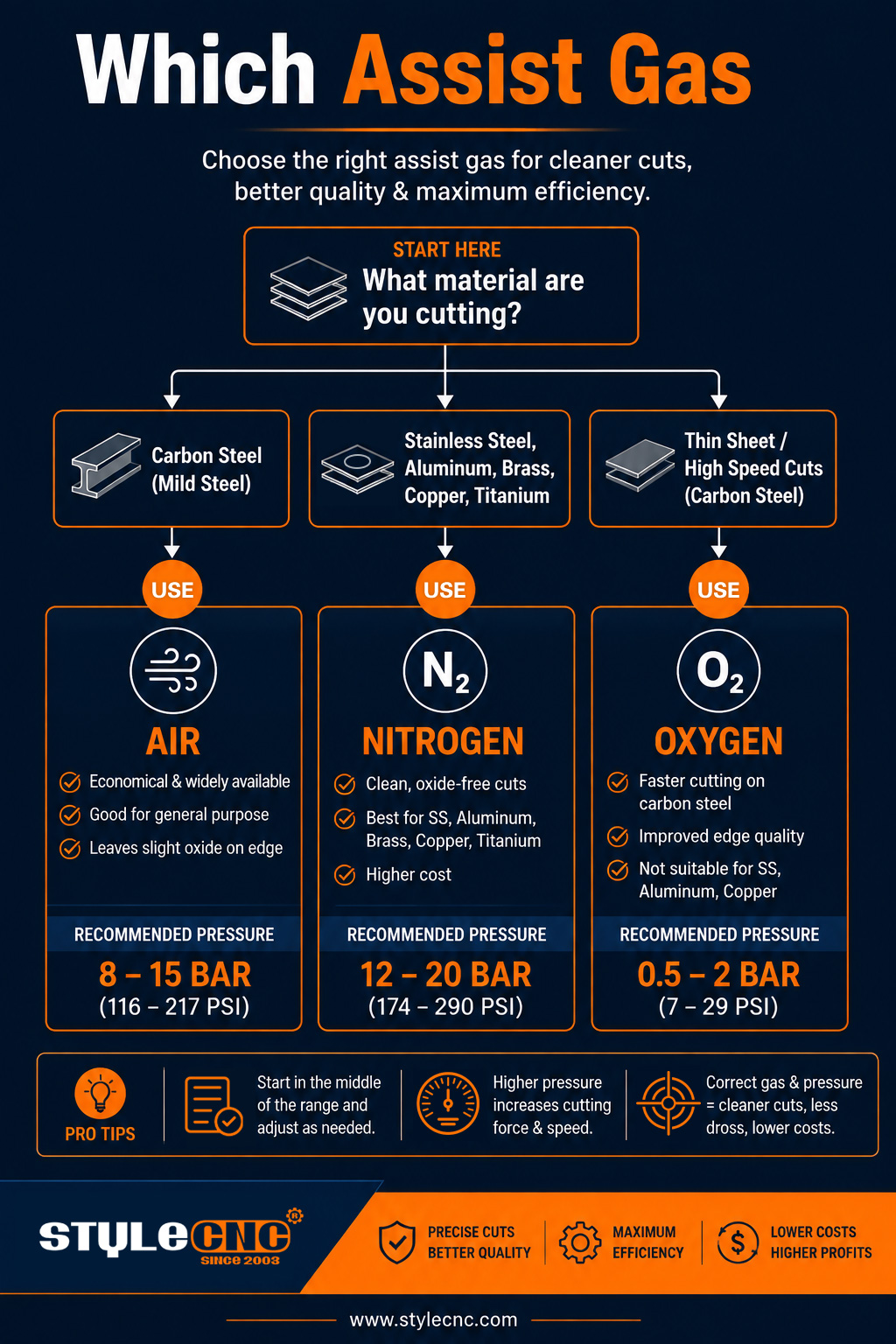
O oxigênio provoca uma reação exotérmica no aço macio, de modo que a chama realiza parte do corte. É a opção ideal para chapas grossas, ao custo de uma borda oxidada que precisa ser limpa antes da soldagem ou da pintura eletrostática a pó.
O nitrogênio é inerte e deixa uma borda brilhante e sem acabamento em aço inoxidável e alumínio. Ele opera em alta pressão e tem um custo elevado, exatamente a lacuna que o ar comprimido seco agora preenche. máquinas de corte a laser de fibra.
O ar já é composto por aproximadamente 78% de nitrogênio. Uma análise da indústria publicada na revista The Fabricator classifica as bordas cortadas a ar com uma nota em torno de 8, em comparação com a nota 10 do nitrogênio, o que é mais do que aceitável para a maioria das peças, a uma fração do custo do gás.
Tabela de ajustes de pressão por material
Comece pelas janelas abaixo e, em seguida, ajuste em pequenos passos, observando a largura do corte. A pressão deve ser lida na cabeça de corte, não em um compressor do outro lado da oficina.
| Material e Operação | Gas | Pressão Inicial | Efeito prático |
| Medição | tipo de gás | bar (1 bar equivale a cerca de 14.5 psi) | o que o jato faz na fenda |
| Gravura em madeira | Ar, baixo fluxo | 0.2-0.5 | Impede que a fumaça atinja a lente sem deixar marcas de cinzas. |
| Corte de madeira compensada e MDF | ar | 1-2.5 | Elimina a fumaça resinosa e extingue labaredas. |
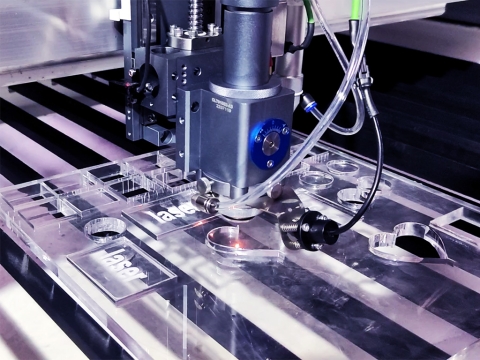
| Corte acrílico | Ar, mínimo | 0.1-0.3 | Preserva a borda polida à chama. |
| Trabalho em couro e tecido | Ar, baixo fluxo | 0.2-0.4 | Evita que se forme um halo de queimadura ao redor do desenho. |
| Corte de aço macio | Oxygen | 0.4-0.8 | Impulso exotérmico para velocidade e espessura |
| Corte de aço inoxidável | azoto | 10-16 | Borda brilhante e livre de óxidos, pronta para soldar. |
| Corte de alumínio | Nitrogênio ou ar seco | 8-14 | Controla rebarbas e óxido de borda. |
| Aço macio fino, alta velocidade | Ar comprimido seco | 6-10 | Qualidade próxima à do nitrogênio puro por uma fração do preço. |
As bombas de diodo para hobby são classificadas em vazão, e não em pressão; de 10 a 30 L/min são suficientes para a maioria dos trabalhos em bancada. O diâmetro do bico influencia tudo, então mantenha-o constante durante o ajuste.
Números-chave que vale a pena lembrar
• O ar comprimido é composto por cerca de 78% de nitrogênio, razão pela qual o ar seco de oficinas se aproxima tanto da qualidade do gás engarrafado.
• As bombas de bancada têm vazão de 10 a 30 L/min; no nível do diodo, a vazão constante é mais importante do que a pressão manométrica.
• O corte com nitrogênio em aço inoxidável normalmente opera a uma pressão de 10 a 16 bar, portanto, as conexões e mangueiras devem ser dimensionadas adequadamente.
• A pressão de oxigênio permanece abaixo de 1 bar em aço macio; pressão extra alarga o corte em vez de acelerá-lo.
• As classes de pureza do ar publicadas pela CAGI fornecem uma linguagem comum para descrever o quão seco e livre de óleo um suprimento realmente é.
• Um bico desalinhado pode desperdiçar metade do jato antes que qualquer indicador mostre um problema.
Configurar a companhia aérea corretamente
Comece pelo bico e vá começando pelo terminal inverso. Instale um regulador e um manômetro na máquina, um filtro coalescente para reter a névoa de óleo e um secador refrigerado antes de ambos; água e óleo são as duas maneiras mais rápidas de danificar as lentes.
Centralize o feixe no orifício do bocal com um jato de fita após qualquer colisão da cabeça ou trabalho com espelhos. Um jato que empurra o material fundido lateralmente deixa uma parede limpa e outra com resíduos.
O sistema Assist empurra a fumaça para fora da fresta, mas ainda é necessário algo para removê-la do gabinete. Combine a mangueira de ar com um filtro. extrator de fumaça especialmente para plásticos; a questão de Cortar acrílico é tóxico? Tudo se resume exatamente a essa extração.
Mantenha um extintor de incêndio adequado aos materiais utilizados ao seu alcance e siga as orientações da NFPA sobre incêndios antes de deixar qualquer laser funcionando sem supervisão; o fluxo de ar reduz as chamas, mas não as elimina completamente.
Perguntas que os operadores realmente fazem
Será que eu realmente preciso de uma bomba de insulina? 10W Gravador de diodos?
Para gravação, você pode improvisar sem uma, mas a lente sofre as consequências com o acúmulo de resíduos e o risco de incêndio em madeira resinosa. Uma pequena bomba custa menos que uma lente de reposição e melhora os cortes imediatamente.
Por que a borda acrílica do meu aparelho ficou opaca após a troca da bomba?
Um fluxo forte resfria a massa derretida antes que ela possa se autopolir, deixando gelo. Reduza a pressão para algo entre 0.1 e 0.3 bar para obter uma camada transparente; a mesma abordagem de baixa pressão de ar pode ser aplicada em um método dedicado. máquina de corte a laser acrílico O perfil é utilizado para passes de polimento.
Uma máquina de corte de fibra pode funcionar com ar comprimido da oficina em vez de nitrogênio?
Para aço macio e muitos trabalhos em alumínio, sim, desde que o suprimento seja seco e filtrado com óleo. Para acabamentos estéticos em aço inoxidável e bordas prontas para soldagem, o nitrogênio ainda é a melhor opção, então a maioria das oficinas utiliza ambos os tipos de nitrogênio e alterna entre eles conforme a necessidade do trabalho.
Erros comuns que prejudicam o desempenho do jato
• Utilizar uma única pressão para cada material e operação.
• Jateamento de acrílico com alto fluxo, resultando na perda da borda polida a chama.
• Injetar ar úmido e oleoso diretamente na cabeça de corte.
• Ignorando o alinhamento do bocal, o jato empurra o material fundido para uma das paredes do corte.
• Optei por usar oxigênio no aço inoxidável e fiquei me perguntando por que a borda escureceu.
• Compressor subdimensionado, fazendo com que a pressão caia na metade da espessura da chapa.
• Desativar a assistência de gravação e permitir que os resíduos embacem a lente.
• Leitura da pressão no compressor em vez de na cabeça de corte.
Lista de verificação para configuração do sistema de assistência pneumática
✓ Ajuste a pressão do gás e a pressão inicial ao material antes de cada trabalho.
✓ Instale um secador refrigerado e um filtro coalescente antes do cabeçote.
✓ Verifique o alinhamento do bico com uma fita métrica após qualquer colisão.
✓ Confirme a distância de afastamento especificada no manual da sua máquina.
✓ Observe o primeiro corte de um novo material com um extintor de incêndio ao alcance.
✓ Registre a pressão ao lado da velocidade e da potência na folha de configurações.
✓ Esvazie o tanque do compressor e troque os elementos do filtro conforme o cronograma.
Perguntas frequentes
Um compressor maior é sempre melhor?
Não. O cabeçote só permite a passagem da quantidade de líquido que o bocal comporta, portanto, um compressor superdimensionado geralmente funciona com menos frequência. Dimensione o compressor para obter um fluxo constante na sua pressão de trabalho máxima, mais uma margem de segurança, e invista a economia em secagem e filtragem, que são muito mais importantes na lente.
Qual a pressão ideal para cortar madeira compensada de 3 mm?
Cerca de 1 a 2 barras em um CO2 A máquina processa a maioria das madeiras compensadas, o suficiente para dissipar a fumaça da resina sem espalhar brasas. Se as bordas ainda carbonizarem, aumente o fluxo de ar em um nível antes de ligar a máquina. Verifique se o jato do bico está atingindo a ranhura.
Por que minha lente fica embaçada mesmo com o auxílio de ar ligado?
A ótica embaçada geralmente indica que o próprio ar está sujo. A névoa de óleo do compressor e a umidade se acumulam no vidro quente, portanto, adicione um filtro coalescente e um secador, e verifique se o fluxo de ar está correto no bocal, em vez de estar vazando por uma conexão solta a montante.
Qual a diferença de velocidade entre o oxigênio e o ar em relação ao aço macio?
Em chapas mais espessas, o aumento exotérmico é substancial, muitas vezes permitindo que a mesma potência corte visivelmente mais rápido ou lide com seções mais pesadas. Em chapas finas, a folga diminui, razão pela qual muitas oficinas usam ar seco abaixo de alguns milímetros e reservam o oxigênio para trabalhos mais pesados.
O auxílio de ar comprimido altera a qualidade da gravação de fotos?
Sim, em ambas as direções. Um fluxo suave impede que a fumaça deposite novamente uma névoa cinza sobre a imagem, mas um jato forte pode espalhar cinzas finas de forma irregular. Muitos operadores reduzem o fluxo para o mínimo estável durante as fotos e reservam a pressão forte para os cortes.
Quão seco o ar precisa estar para um cortador de fibras?
O objetivo é obter a secura ideal para instrumentos: no mínimo, um secador refrigerado, com secagem por dessecante em climas úmidos. A água que atinge uma janela protetora quente pode trincá-la, e microgotículas podem dispersar o feixe no meio do corte. Se o tanque expelir água ao ser drenado diariamente, o suprimento não está suficientemente seco.
Um único compressor consegue alimentar o laser e outras ferramentas da oficina?
É possível, mas isole a linha do laser com seu próprio regulador, secador e filtro, e certifique-se de que a pressão se mantenha enquanto outras ferramentas estiverem em uso. Uma lixadeira que liga no meio do corte pode fazer com que a linha ceda o suficiente para queimar uma borda na metade da chapa.
O que é o teste da fita métrica para alinhamento do bico?
Cole fita adesiva na ponta do bocal e dispare um único pulso de baixa potência. A marca de queimadura indica onde o feixe se posiciona dentro do cano; centralizado significa que o jato de gás e o feixe se movem juntos. Ajuste os espelhos ou a cabeça até que o ponto fique exatamente no centro.
A geração de nitrogênio no local compensa em alguma situação?
Para oficinas que cortam aço inoxidável diariamente, um gerador de membrana ou PSA geralmente supera o gás engarrafado em poucos anos, especialmente quando combinado com um booster de alta pressão. Usuários ocasionais raramente recuperam o custo; ar comprimido seco, juntamente com cilindros alugados, cobre os picos de consumo de forma mais econômica.